
Sognefjord history at a glance
Sognefjord history is written in stone, timber and rock tunnels. The fjord itself is a glacial landscape, the churches along its arms date from the Middle Ages, and the railway, tunnel and viewpoint belong to the twentieth and twenty-first centuries. Together they explain why a trip here feels like a journey through very different eras.
At 205 km long and up to 1,308 m deep, the Sognefjord is Norway's longest and deepest fjord. Only the Nærøyfjord part of the branched system is on the World Heritage List, which UNESCO added in 2005 as part of the West Norwegian Fjords. The dates below are the ones that are well documented, and where a secure year is missing we leave the date out.
Our pick: a day with a Viking village
The guided tour of Njardarheimr Viking Village is one part of this day, not a history tour.
Hand-picked tours, booked through GetYourGuide. Prices are indicative starting prices in euros (as of October 2026). Tap a tour for live availability and the current price in your currency.
Tours around the Sognefjord
Fjord cruises, rail combinations and day trips around the Sognefjord, with details on duration and what is included.
How the fjords formed
The shape of the land comes from ice.
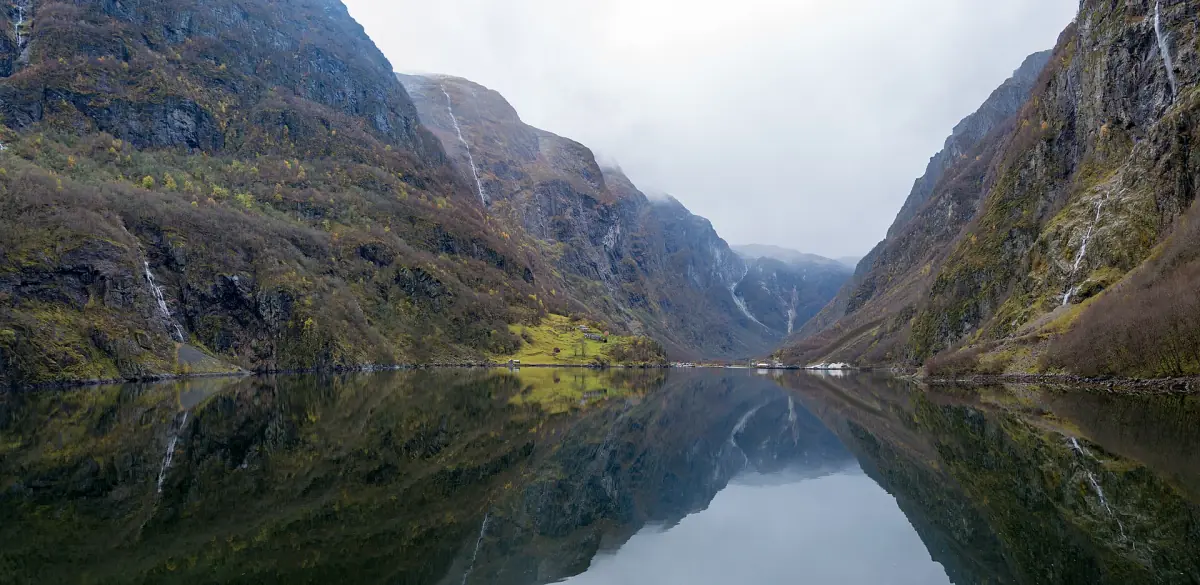
UNESCO describes the World Heritage fjords as a landscape formed by glaciers, with especially pronounced narrow, steep-sided fjords. The ice carved deep valleys that the sea later filled. We give no single year for the formation of the Sognefjord, because a process this long does not fit a single date. The sheer rock walls you see from a boat on the Nærøyfjord are part of that same story.
Aurlandsfjord, Nærøyfjord and Lustrafjord are arms of the branched fjord system. Old farms and fjord villages still line the water, and you pass them on a fjord cruise.
Stave churches
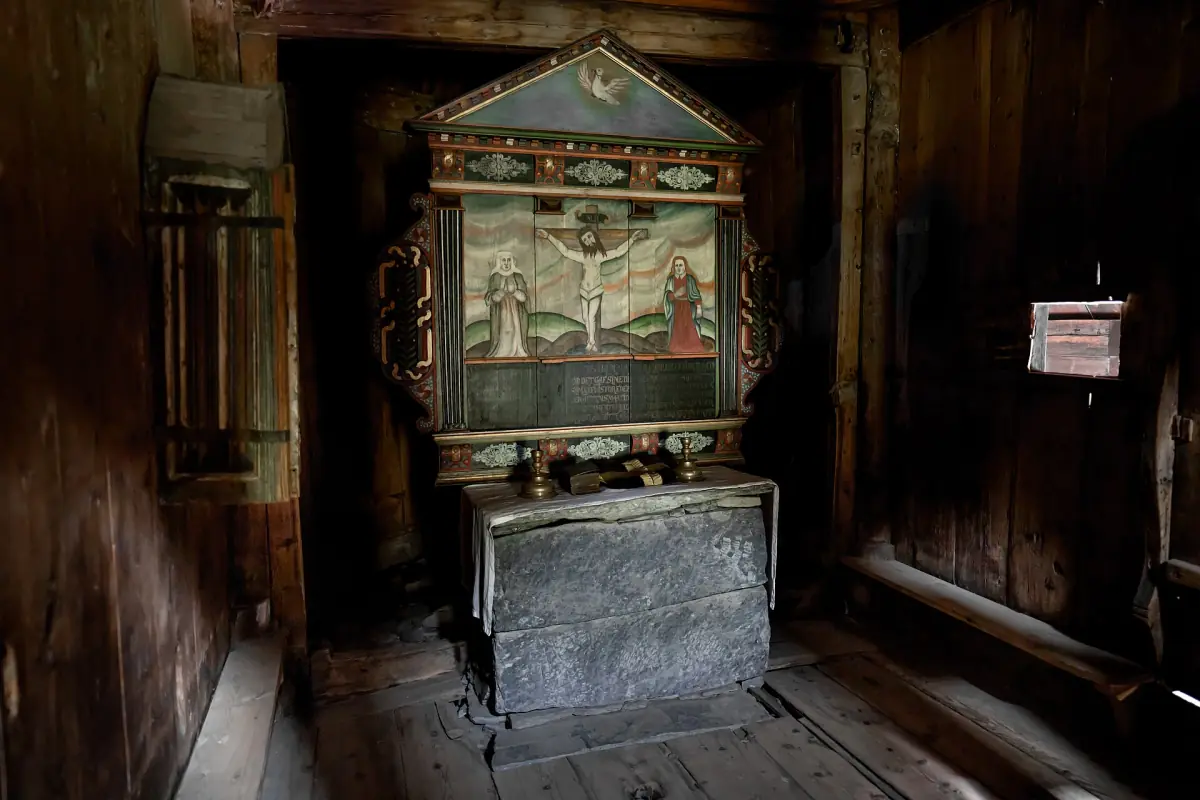
Two stave churches stand out. The church at Urnes dates from around 1130, and its north portal, from around 1070, was reused from an earlier building. UNESCO has listed Urnes since 1979 and highlights how Celtic art, Viking traditions and Romanesque spatial design come together there. That does not make the present church a pre-Christian structure.
Borgund stave church dates from around 1180 and stands on the E16 near Lærdal. It has a visitor centre with an exhibition, a café and a shop. Opening times and prices change, so check them with the owner before you go. Practical details are on the stave churches page.
The Flåm Railway and the Lærdal Tunnel
The Flåmsbana was built from 1923 to 1940 and opened on 1 August 1940. It has run on electricity since 1944. The line has 20 tunnels, which the operator says were largely dug by hand. The old station in Flåm now houses a museum with free entry. See the Flåm Railway page for the line today.
The Lærdal Tunnel on the E16 opened in November 2000 and is 24,509 m long, about 24.5 km. Work from 16 November 2026 brings announced night closures, and works are planned to run until around 2030. Details are on the Lærdal Tunnel page.
Stegastein and the fjord villages
The newest landmark is the Stegastein platform, opened in 2006. It was designed by Todd Saunders and Tommie Wilhelmsen, juts out 30 m from the mountainside and is 3.3 m wide, at about 650 m above the Aurlandsfjord. It shows how modern design now frames a very old landscape. More is on the Stegastein page.
Along the cruise routes the old farms and fjord villages continue the story of daily life by the water. A Viking village is part of one guided day trip from Bergen, which treats it as a visit stop, not as a lesson in history. When you plan, use dates as context and let the places do the telling.
Sognefjord history: frequently asked questions
When was Urnes stave church built?
The church dates from around 1130, and its north portal from around 1070 was reused. UNESCO has listed Urnes since 1979.
When did the Flåmsbana open?
It was built from 1923 to 1940 and opened on 1 August 1940. It has been electric since 1944 and has 20 tunnels.
Is the whole Sognefjord a World Heritage Site?
No, only the Nærøyfjord part is, as part of the West Norwegian Fjords listed in 2005.
When did the Lærdal Tunnel open?
It opened in November 2000. At 24,509 m it carries the E16.